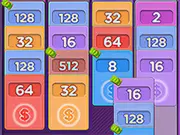
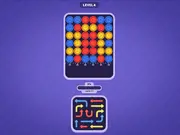
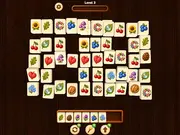
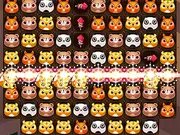
These are simple games where the mechanic is to find items that share the same color or design. Select one item and try to find the matching element to create a pair or in some games a match of three or more. The challenge is to use your memory to remember where hidden items are placed and to use planning in more advanced matching games to complete levels within the given time. Matching games require searching visually in many cases to locate similar items. Thus matching games are objective as there should always be a clear solution in a good matching game.
History of Matching Games
The history of matching games goes back to first know game element, the dice. Dice were used to derive the Domino game's white and black tiles. The Dominos game was first mentioned in Chinese records dating back to the 13th century during the Song dynasty. Another game element that heavily influenced the matching game genre was the Chinese playing cards. First seen in a 9th-century board game and later made popular in Europe in the 14th century. Later, Mahjong tiles were recorded in the 17th century and had tiles similar to the domino except with more complex designs. In more modern times, matching and more generally sorting have become common elements in many game genres including newer card games like Rummy, Solitaire, and match three games.
These tiles and their paper card counterparts were likely the first source of matching games. They would have been turned face down and the goal would have been to find matching tiles, flipping them right side up, two at a time. In the event a match is not found, the player would need to recall where tiles were located to correctly find all matching pairs.